Detachable radiator banks
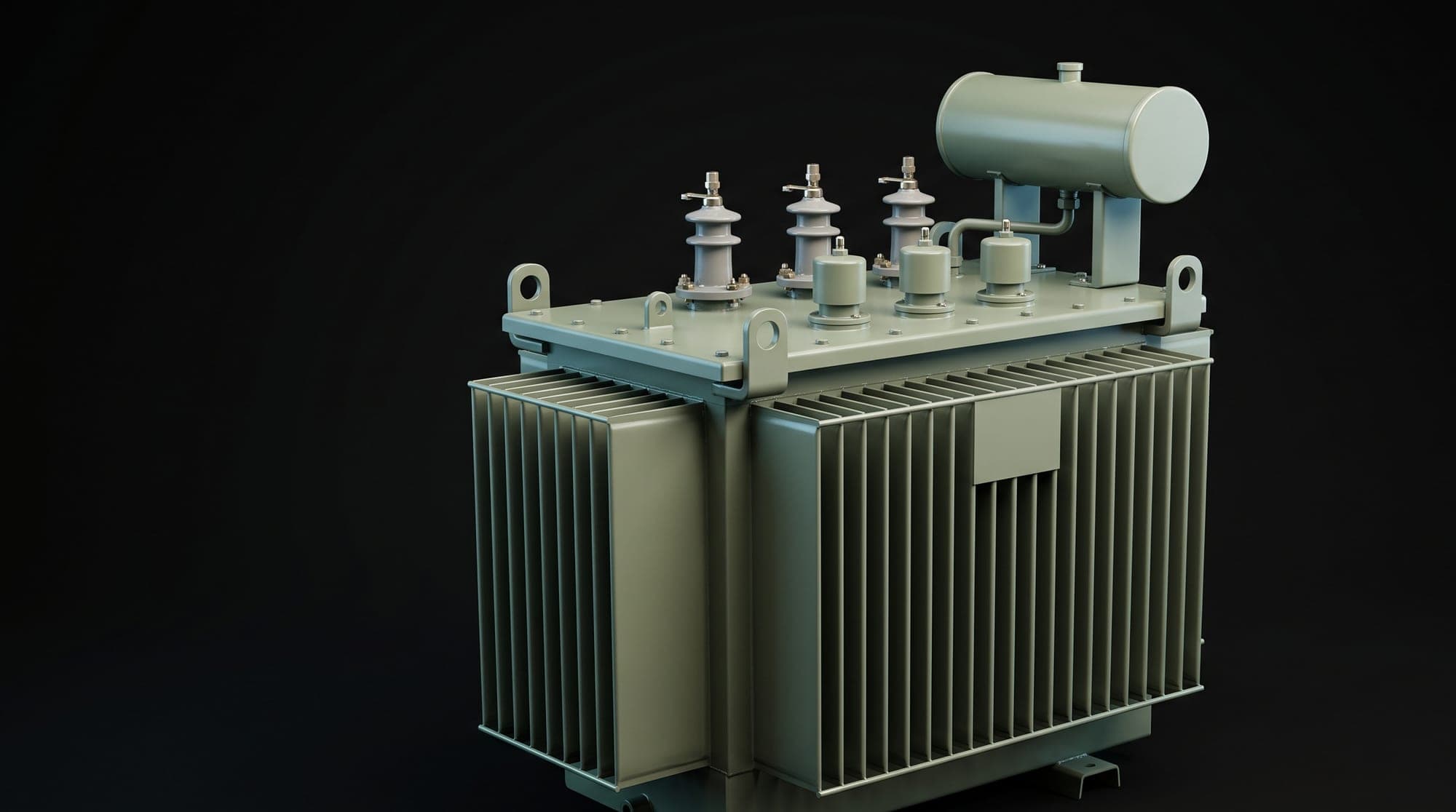
Cooling surface can be removed for transport and re-erected on site, which matters for anything that will not fit through a gate assembled.
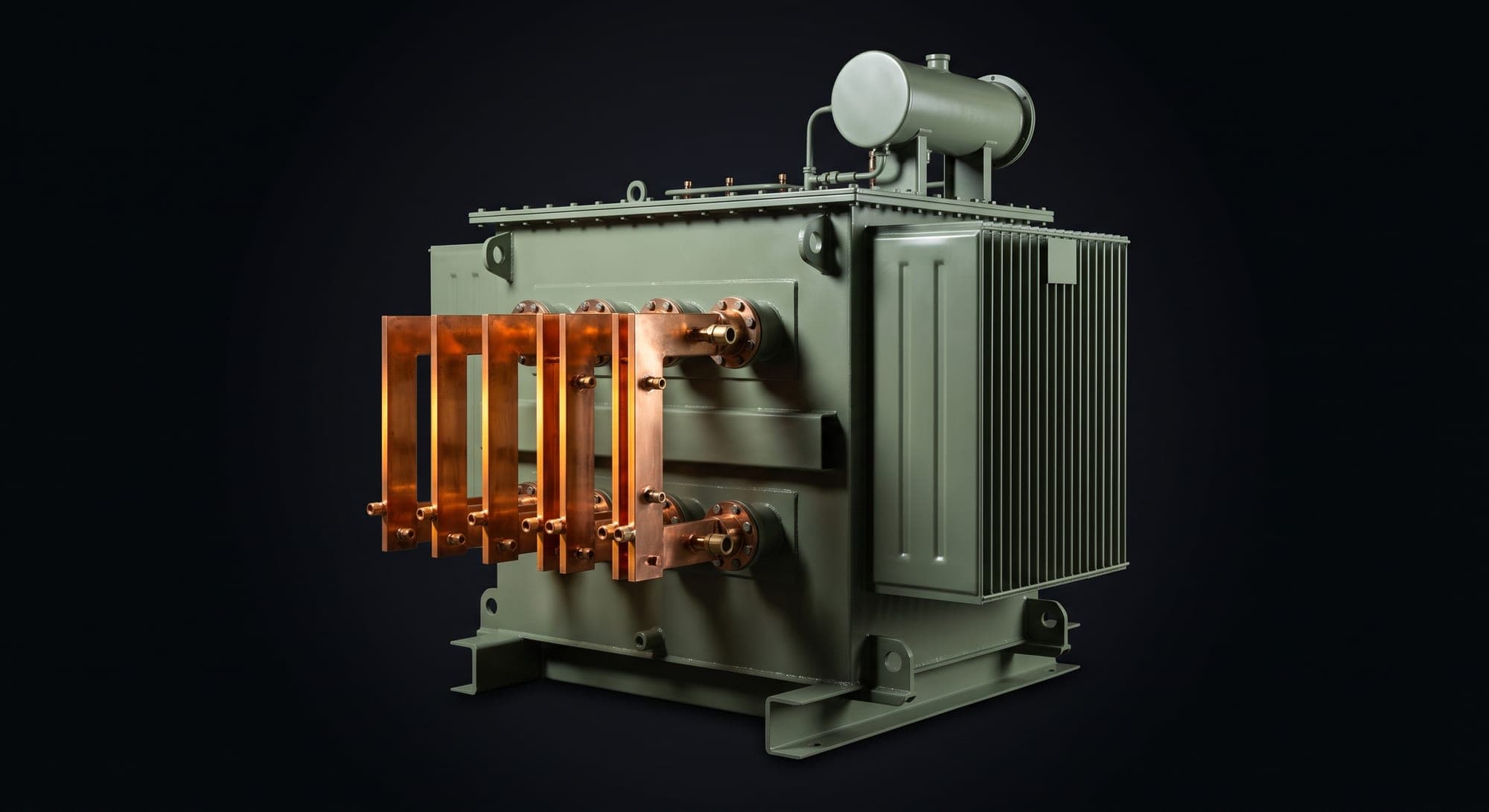
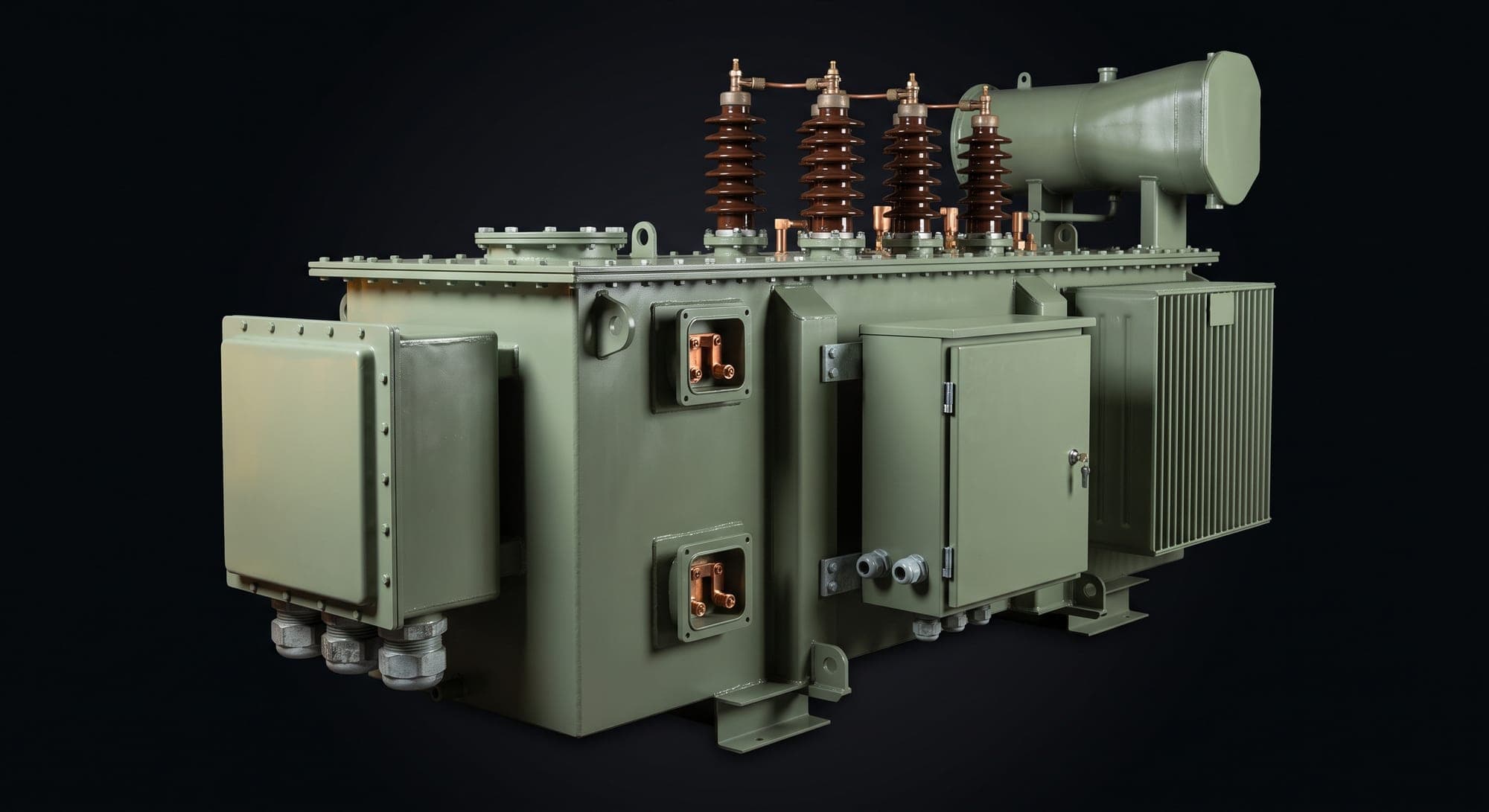
Illustration — representative of the product type
11 – 66 kV
Power transformers for substation and heavy industrial duty across the 11 kV to 66 kV range, with detachable radiator banks, conservator and marshalling box. Supplied with the full test certificate set and supported afterwards by our own repair and oil filtration teams.
Overview
A power transformer sits further up the network than a distribution unit — at a substation, at a plant intake, or between two voltage levels inside a large works. It carries more, costs more to lose, and is usually the single component whose failure takes the whole site down.
Our power transformers are built across the same 11 kV to 66 kV band we have specialised in since 1988, with detachable radiator banks so the unit can be moved and re-erected without draining the whole cooling surface, a conservator for oil preservation, and a marshalling box terminating the protection and temperature devices.
Because they are large, the after-sale question matters more than the purchase. We repair and rewind at our works and filter oil onsite — including on units built by other manufacturers — so a failure does not automatically become a replacement.
Built to order. Send your required rating and voltage class and we will confirm against your specification.
Key features
Cooling surface can be removed for transport and re-erected on site, which matters for anything that will not fit through a gate assembled.
Natural cooling as standard, with forced-air capability where the continuous rating needs to be raised without a larger tank.
Routine tests carried out at our own works and supplied with the unit, rather than at a third-party house.
Manufactured under a certified quality management system, with traceability through the build.
The works that manufactured the unit can rewind it. Nothing about the repair path depends on a third party.
Dielectric strength can be restored in place, without moving a unit that may weigh several tonnes.
Applications
The sectors this unit is specified for most often, and what each of them is actually solving for.
A distribution utility owns thousands of transformers spread across a network, most of them lightly loaded for most of their lives and none of them convenient to reach.
View sector →Corrosive atmospheres attack tanks, radiators and bushings far faster than they do inland, and the classified areas around a process plant put hard constraints on where an oil-filled unit may sit and how it must be contained.
View sector →Solar plants need step-up and auxiliary transformers that spend their lives cycling — full output at midday, nothing at night — which is a different ageing problem from continuous industrial duty.
View sector →Related
Service
Our team at your substation
Read more →Service
Restore dielectric strength without a shutdown replacement
Read more →Knowledge
The dividing line is duty, not size. How load profile, loss economics and impedance decide which type a job actually needs.
Read article →Questions
The practical dividing line is duty, not just size. A distribution transformer feeds a mixed load at the end of the network and spends most of its life lightly loaded, so no-load loss dominates. A power transformer sits between voltage levels, runs closer to its rating for longer, and is specified around load loss, impedance and short-circuit withstand. If the unit is feeding a substation busbar or a plant intake rather than final consumers, it is a power transformer.
Impedance sets the fault level the downstream switchgear has to interrupt and determines how load shares between units running in parallel. Lower impedance means better voltage regulation but a higher through-fault current. If a transformer is going to run alongside an existing one, its impedance must match closely or the two will circulate current between themselves instead of sharing load.
In most cases, yes. Winding failures, bushing failures, tank leaks and tap changer faults are all repairable. The unit is stripped, the fault diagnosed, the affected windings replaced to the original or an uprated specification, and the whole thing re-tested to the same standard as a new build before it goes back. Replacement is generally only the right answer where the core itself is damaged.
Rating in MVA, voltage ratio, vector group, required impedance, tapping range and whether the tap changer must be on-load or off-circuit. Also the site location and whether there are transport or crane restrictions, because that affects whether radiators and conservator ship separately.
Related products
Enquiries
Send us the rating, voltage class, vector group and quantity. For a like-for-like replacement, a photograph of the existing rating plate is usually enough.