Designed, not configured
Because the winding happens here, a non-standard requirement is a design change rather than a sourcing problem.
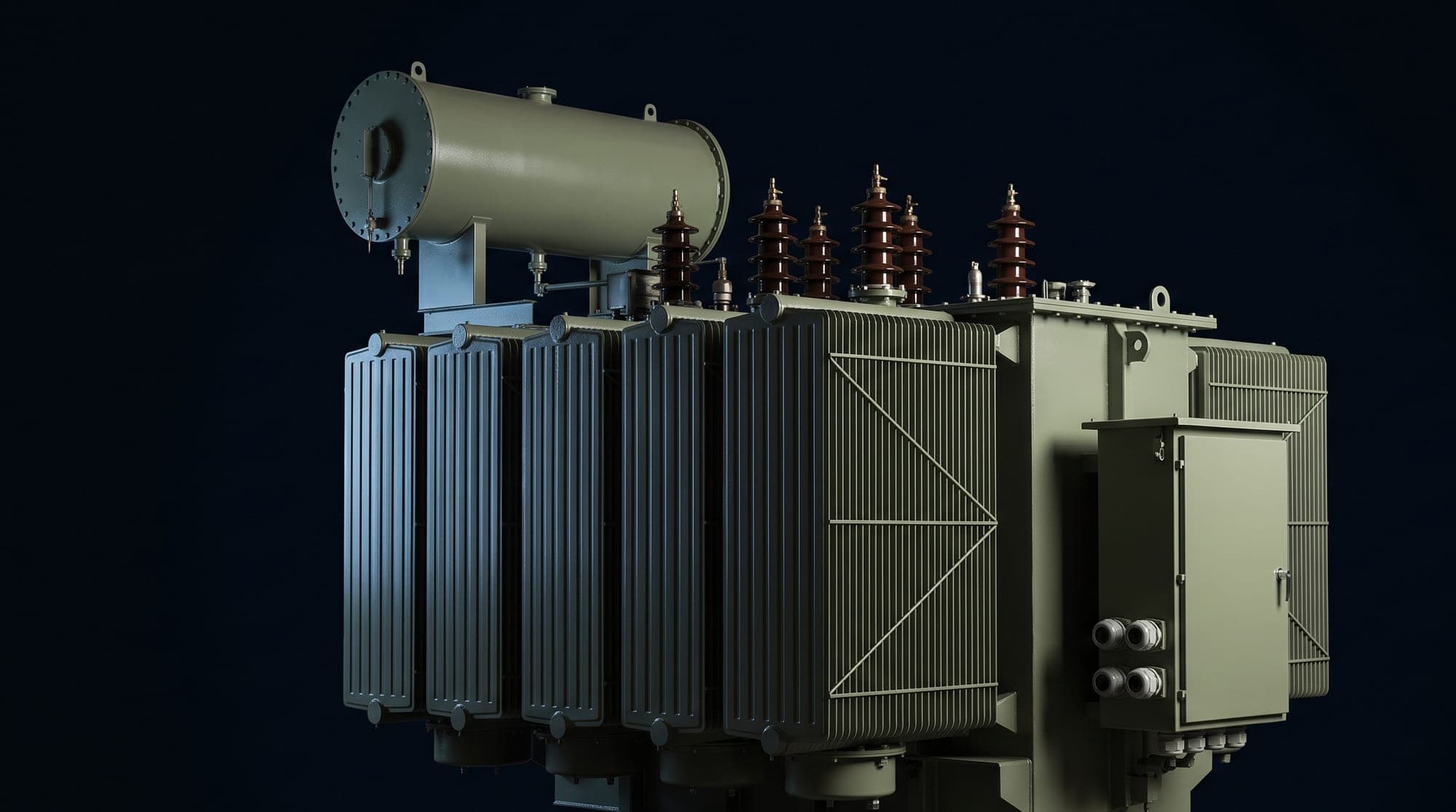
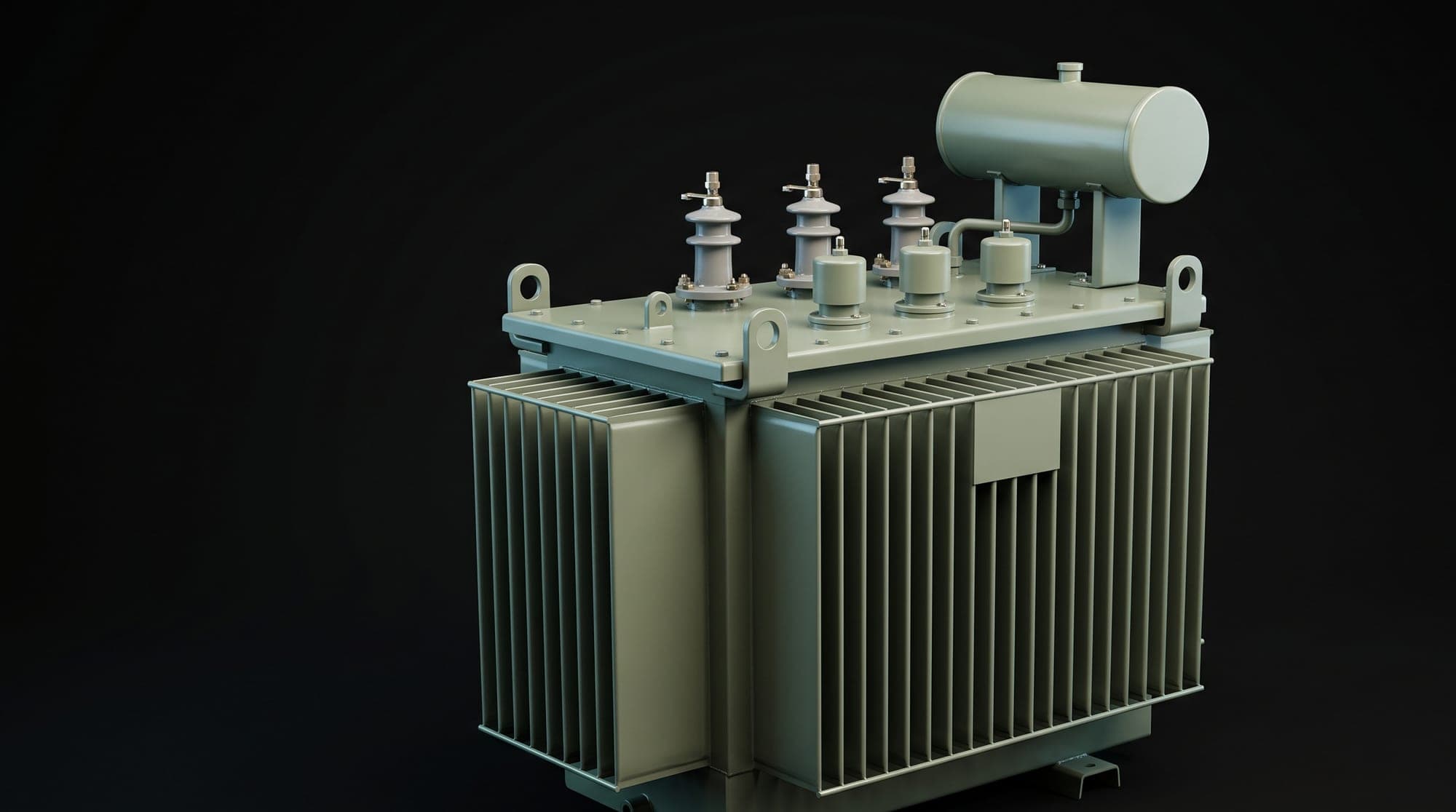
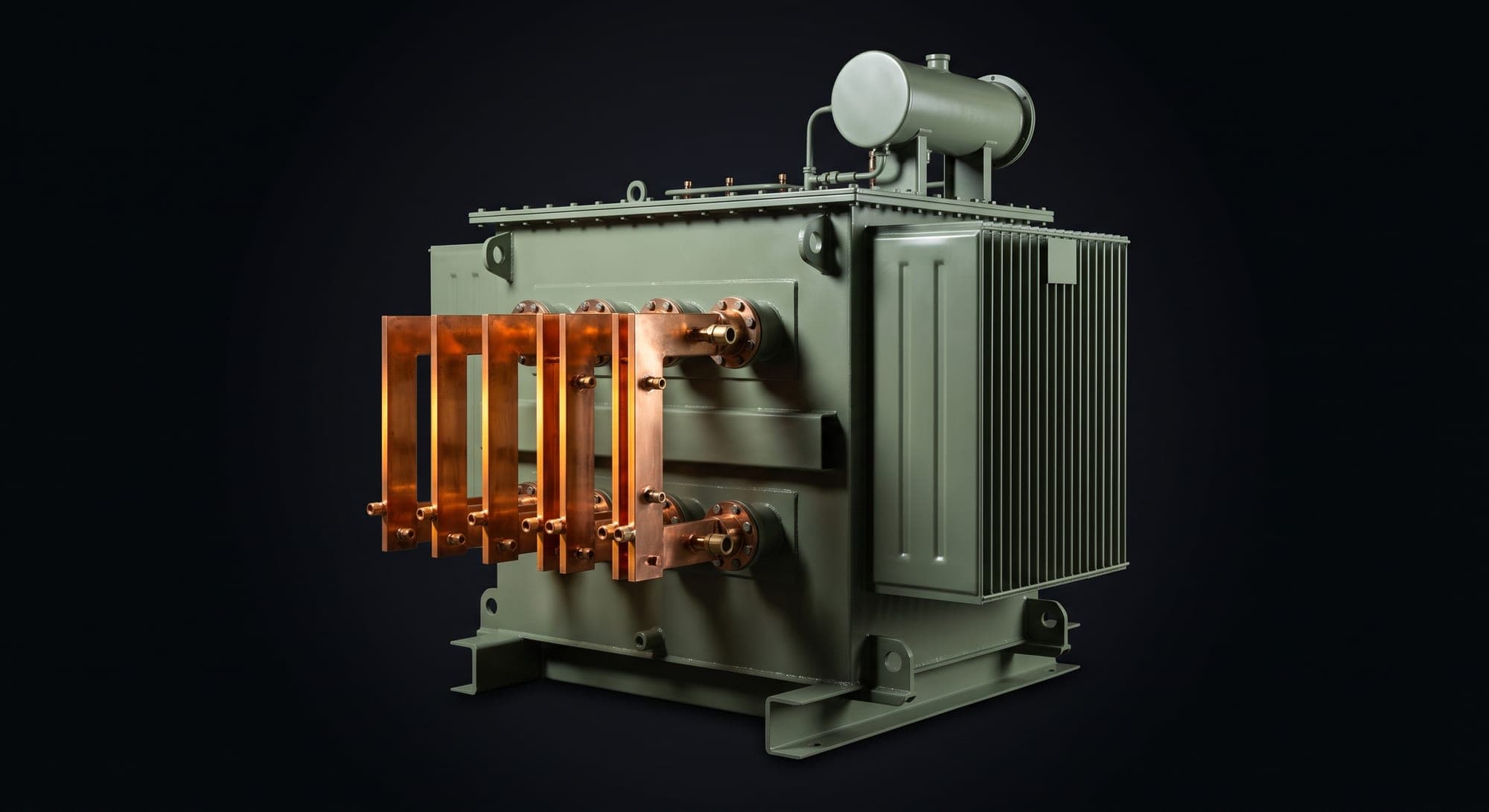
Illustration — representative of the product type
11 – 66 kV
Transformers designed and built against a specification rather than a catalogue — for non-standard ratings, restricted spaces, unusual vector groups, or replacements that must match an existing installation exactly.
Overview
Most transformer enquiries that end up here start the same way: something about the job does not fit a standard unit. The space is too tight, the vector group has to match an existing machine, the ratio is unusual, or a failed transformer has to be replaced like-for-like and the original manufacturer no longer exists.
Because we design and wind in-house rather than assembling bought-in parts, changing the specification is a design decision rather than a supply-chain problem. That is the practical advantage of a works that holds its own BIS licence.
The most common case is a like-for-like replacement. If you can photograph the rating plate of the failed unit, that single image usually carries everything needed to quote: rating, ratio, vector group, tapping range and impedance.
Built to order. Send your required rating and voltage class and we will confirm against your specification.
Key features
Because the winding happens here, a non-standard requirement is a design change rather than a sourcing problem.
A photograph of the failed unit’s rating plate usually carries everything needed to quote a match.
Impedance and vector group matched to an existing unit so the two share load instead of circulating current.
Custom builds run through the same ISO 9001:2015 quality system as standard production.
Applications
The sectors this unit is specified for most often, and what each of them is actually solving for.
A works transformer runs closer to its rating for longer than almost anything on the network, and a failure stops production rather than inconveniencing consumers.
View sector →Corrosive atmospheres attack tanks, radiators and bushings far faster than they do inland, and the classified areas around a process plant put hard constraints on where an oil-filled unit may sit and how it must be contained.
View sector →Clean rooms, cold chains and validated processes do not tolerate an unplanned interruption, and the transformer often sits indoors inside or beneath occupied space — which rules out an oil fire risk regardless of what the electrical case says..
View sector →Surat runs on textile processing, and the loads are unforgiving: continuous three-shift operation, heavy motor starting, airborne lint and dust that block cooling surfaces, and ambient temperatures inside a mill that sit well above the design assumption..
View sector →Related
Service
Built from core to tank, under one roof
Read more →Service
Failed units returned to service, not replaced
Read more →Knowledge
The dividing line is duty, not size. How load profile, loss economics and impedance decide which type a job actually needs.
Read article →Questions
Rating, primary and secondary voltage, vector group, tapping range, required impedance, cooling type, and any physical constraint on size or weight. For a replacement, a clear photograph of the existing rating plate usually contains all of it. Tell us also whether the unit will run in parallel with an existing transformer, because that fixes the impedance.
Yes, and it is a common request. What matters is the rating plate data and the physical constraints of the installation — the foundation bolt centres, cable entry positions, and any restriction on getting the unit into place. With those we can build a functional replacement even where no original drawings survive.
There is additional design time at the front, but the manufacturing itself follows the same route as standard production. The larger variable is usually material availability for the specific conductor and core sizes the design calls for. We confirm a realistic lead time at quotation rather than after the order.
It runs through the same ISO 9001:2015 quality system and the same routine testing as standard production. Note that the ISI mark specifically applies to distribution transformers manufactured under our IS : 1180 BIS licence — a custom unit outside that scope is built to the same process but does not carry that particular mark.
Related products
Enquiries
Send us the rating, voltage class, vector group and quantity. For a like-for-like replacement, a photograph of the existing rating plate is usually enough.