BIS licence held in-house
Licensed to IS : 1180 under CML No. 7200106894 — the licence permitting the ISI mark.
Transformer Manufacturing
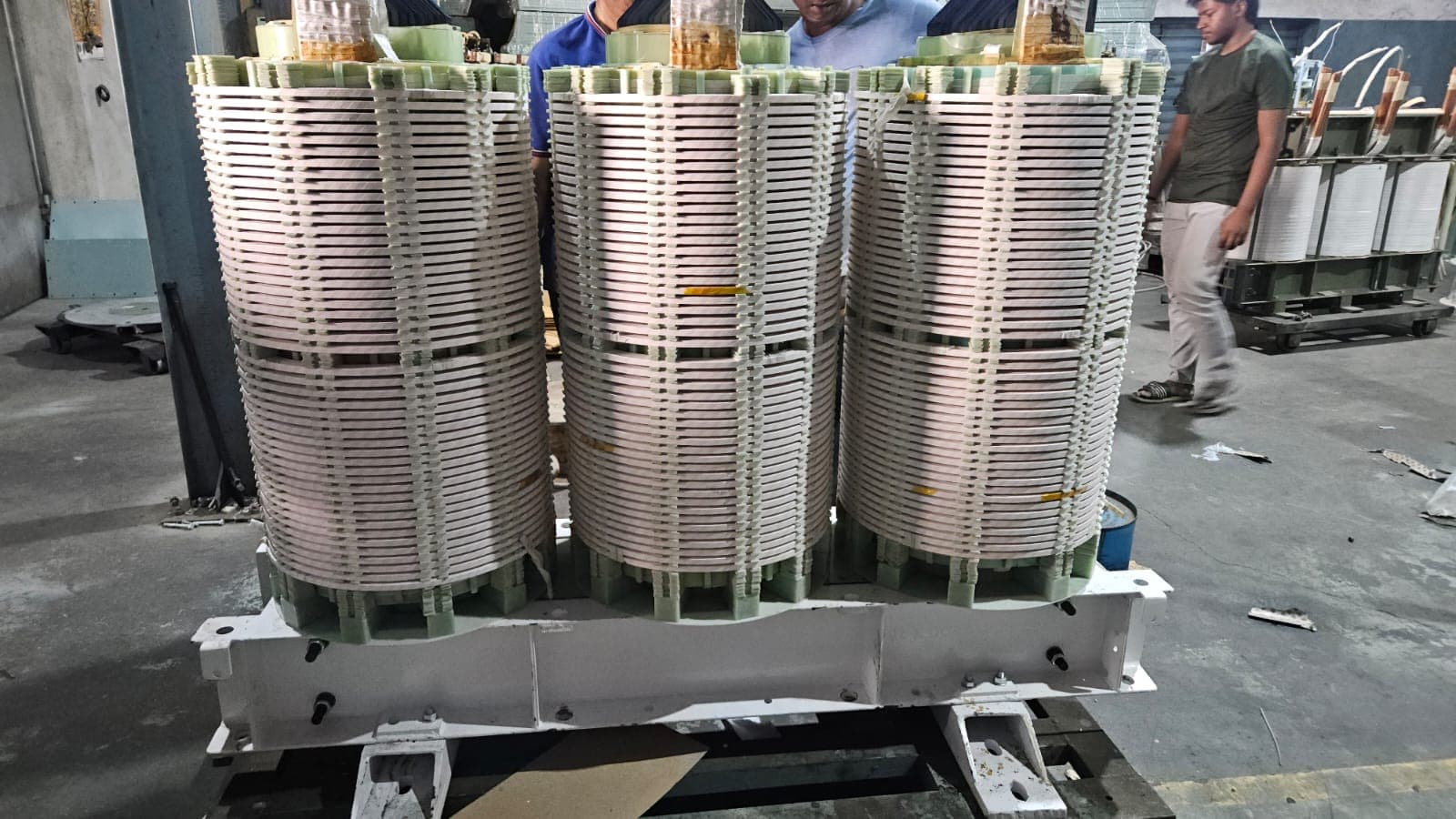
We manufacture distribution, power and dry-type transformers across the 11 kV to 66 kV range at our GIDC Sachin works. Core cutting, winding, assembly, tanking and testing all happen in-house, which is why we can hold a BIS licence to IS : 1180 rather than sub-contracting the parts that carry the certification.
Overview
A BIS licence is granted against an audited manufacturing process and an independently tested product. It can be withdrawn. That is why the steps it covers — core, windings, tanking, testing — are the steps we deliberately keep on our own floor rather than buying in.
The practical consequence for a buyer is traceability. When something needs to be checked, changed or matched, the people who can answer are in the same building as the machine that made it.
Process
These steps happen in this order. The numbering is a sequence, not decoration — each step depends on the one before it.
Rating, voltage ratio, vector group, impedance and tapping range are fixed against your application before any material is cut.
Core laminations are cut and stacked to the design, since core geometry is what sets the no-load loss the unit will carry for its whole life.
HV and LV windings are wound and insulated in-house. This is the step that decides both load loss and short-circuit withstand.
Windings are fitted to the limbs, connected up, clamped and braced against the mechanical forces a through-fault will impose.
The assembly is tanked, fitted with conservator, bushings and protection devices, then filled with treated insulating oil.
Ratio, winding resistance, insulation resistance, no-load and load loss tests are carried out at our works and certified.
The unit ships with its full test certificate set. Large units may ship with radiators and conservator detached for transport.
Benefits
Licensed to IS : 1180 under CML No. 7200106894 — the licence permitting the ISI mark.
Core, winding, tanking and testing are all ours, so nothing that decides quality is outside our control.
Routine tests are performed and certified at our own works rather than at a third-party house.
The works that built the unit can rewind it, filter its oil, or attend site if it fails.
Industries served
The sectors where this service comes up most, and the products it most often applies to.
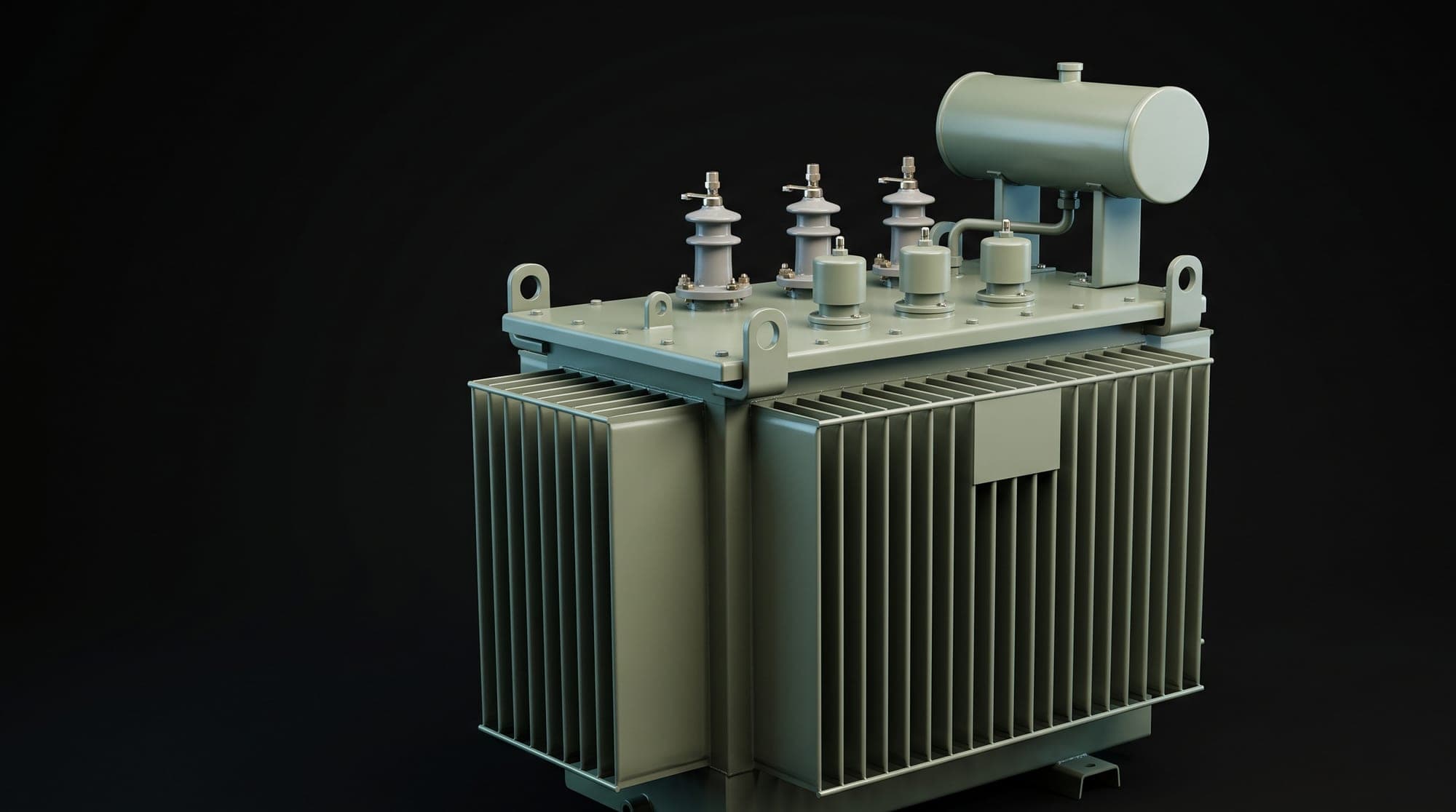
Oil-cooled units for distribution networks, built and tested in-house to IS : 1180.
View product →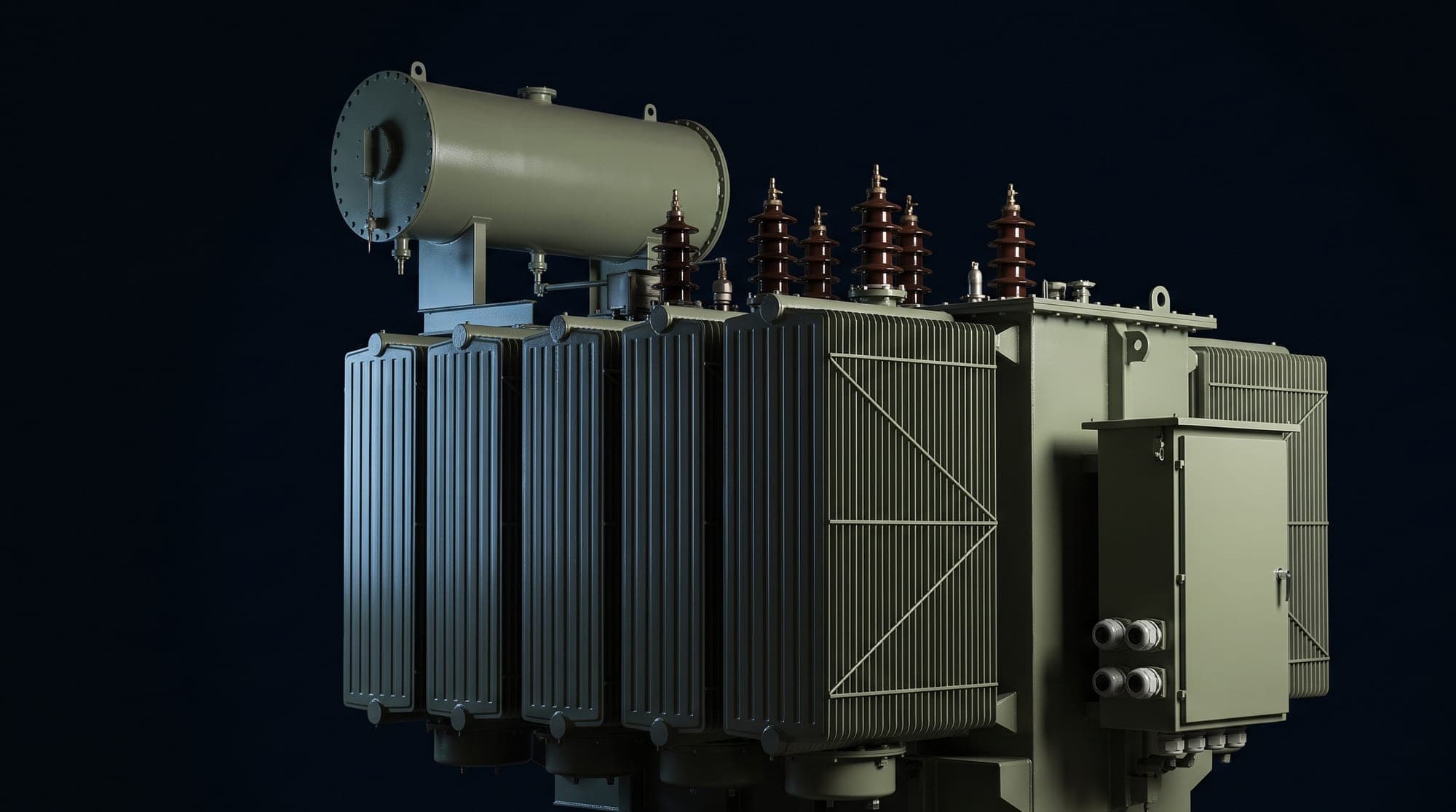
Higher-capacity units for substations and heavy industrial loads.
View product →Knowledge Centre
A BIS licence and an ISO certificate say different things about a supplier. What each one actually covers, how to verify them, and what neither guarantees.
Read article →Questions
TODO_CONFIRM — the client must confirm typical lead times by product and rating before this is published.
Routine tests are carried out on every unit before dispatch: turns ratio, winding resistance, insulation resistance, no-load loss and current, and load loss and impedance. Type tests and special tests such as impulse withstand are arranged separately where a specification calls for them.
Yes. Witnessed testing is common for utility and larger industrial orders, and it is worth doing — it is the point at which the specification you wrote and the machine you are buying are demonstrably the same thing. Tell us at order stage so the test slot can be scheduled.
Our onsite maintenance team attends site for commissioning checks and pre-energising inspection. Civil work, foundations and cable termination are normally handled by the site contractor — tell us the scope you need and we will be explicit about the boundary.
Enquiries
Tell us the make, rating and what the problem is. For breakdowns, call the mobile number directly — it is the fastest route to an engineer.