Two credentials appear on almost every Indian transformer manufacturer's
literature: an ISO 9001 certificate and, for distribution transformers, a BIS
licence to IS : 1180 carrying the ISI mark. They are frequently listed side by
side as if they were the same kind of claim.
They are not. They cover different things, they are granted by different
bodies on different evidence, and only one of them says anything about the
product.
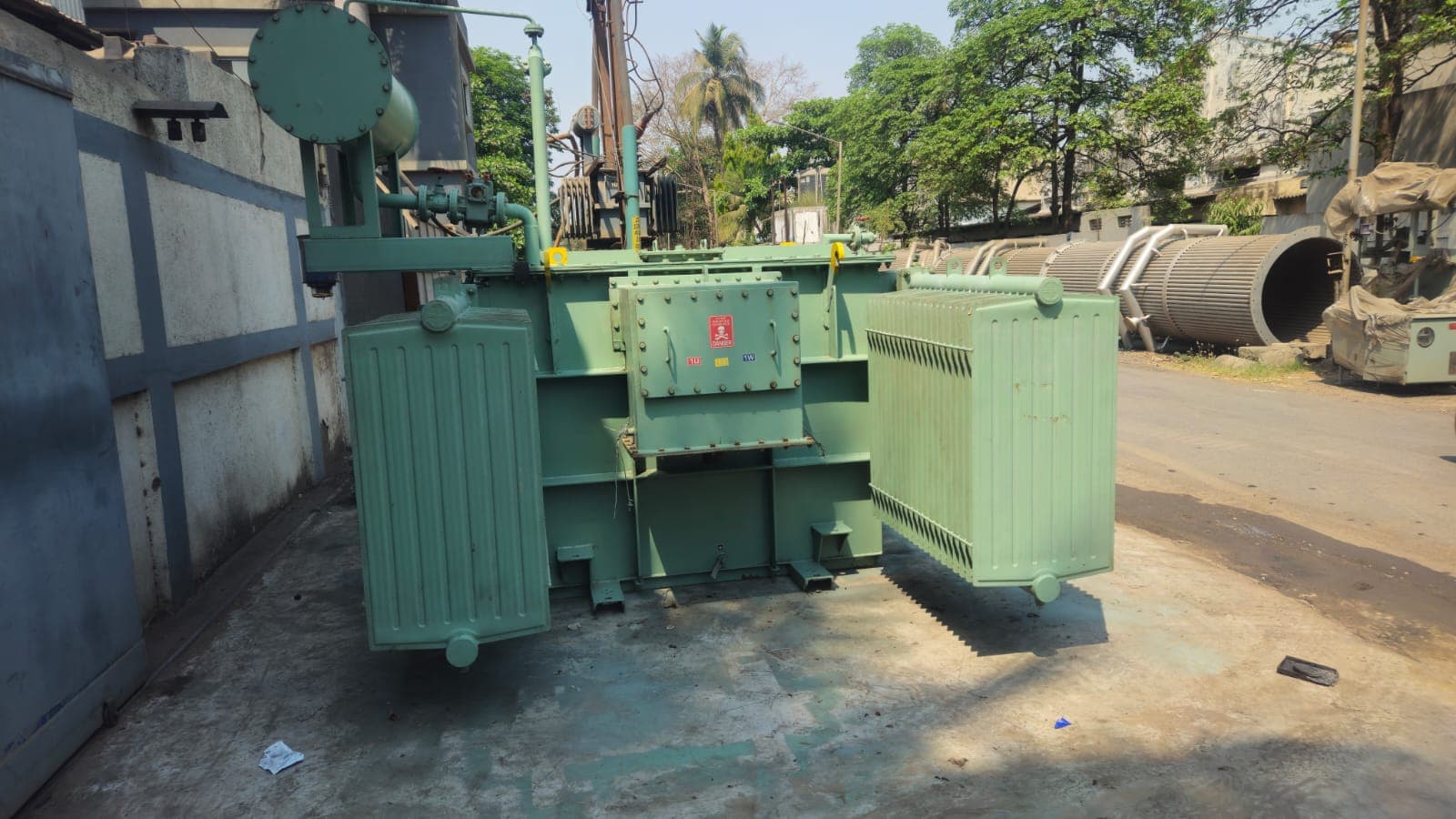
IS : 1180 is the Indian Standard for oil-immersed distribution
transformers up to and including 2500 kVA, 33 kV. It specifies construction,
losses, temperature rise, insulation levels and the tests a unit must pass.
The ISI mark is not a self-declaration. It can only be applied by a
manufacturer holding a valid licence from the Bureau of Indian Standards,
and that licence is granted against two things:
- An audit of the manufacturing process — that the factory has the plant,
the in-house testing capability and the quality controls to make conforming
product repeatably.
- Independent testing of samples drawn against the standard.
Two consequences follow, and both are useful to a buyer.
First, the licence covers processes, not just output. A manufacturer
holding a BIS licence has demonstrated they can carry out the covered
operations — core, windings, tanking, testing — in-house. This is why licensed
manufacturers tend not to sub-contract those steps: doing so would put the
licence at risk.
Second, it can be withdrawn. BIS conducts surveillance and can suspend or
cancel a licence for non-conforming product. Unlike a one-off certificate, a
live licence is an ongoing statement.
Every licence carries a CML number (Central Marks Licence), and it appears
alongside the ISI mark on the rating plate. It is the licence's unique
identifier, and it is what makes the claim checkable.
Ask for it. A manufacturer claiming ISI marking who cannot immediately give you
a CML number is worth a second look.
The scope of a BIS licence is specific. A licence to IS : 1180 covers
oil-immersed distribution transformers within the stated range. It does not
extend to power transformers, dry-type units, furnace transformers or custom
builds outside that scope.
That is not a criticism of the manufacturer — those products are made to other
standards, and some have no equivalent mandatory mark. But a supplier who
implies their ISI licence covers everything they make is overstating it.
ISO 9001 is a quality management system standard. It certifies that a
company has defined processes, keeps records, handles non-conformities through
a documented route, and reviews and improves the system.
It applies to how an organisation is run. It is not specific to transformers,
and it says nothing about whether any individual unit performs.
That is worth stating plainly because ISO 9001 is often presented as a product
quality claim. It is not one. It is a consistency-of-process claim, and it is
genuinely valuable as that — a certified system is why the tenth transformer
should be built the same way as the first — but it is not a substitute for a
test certificate.
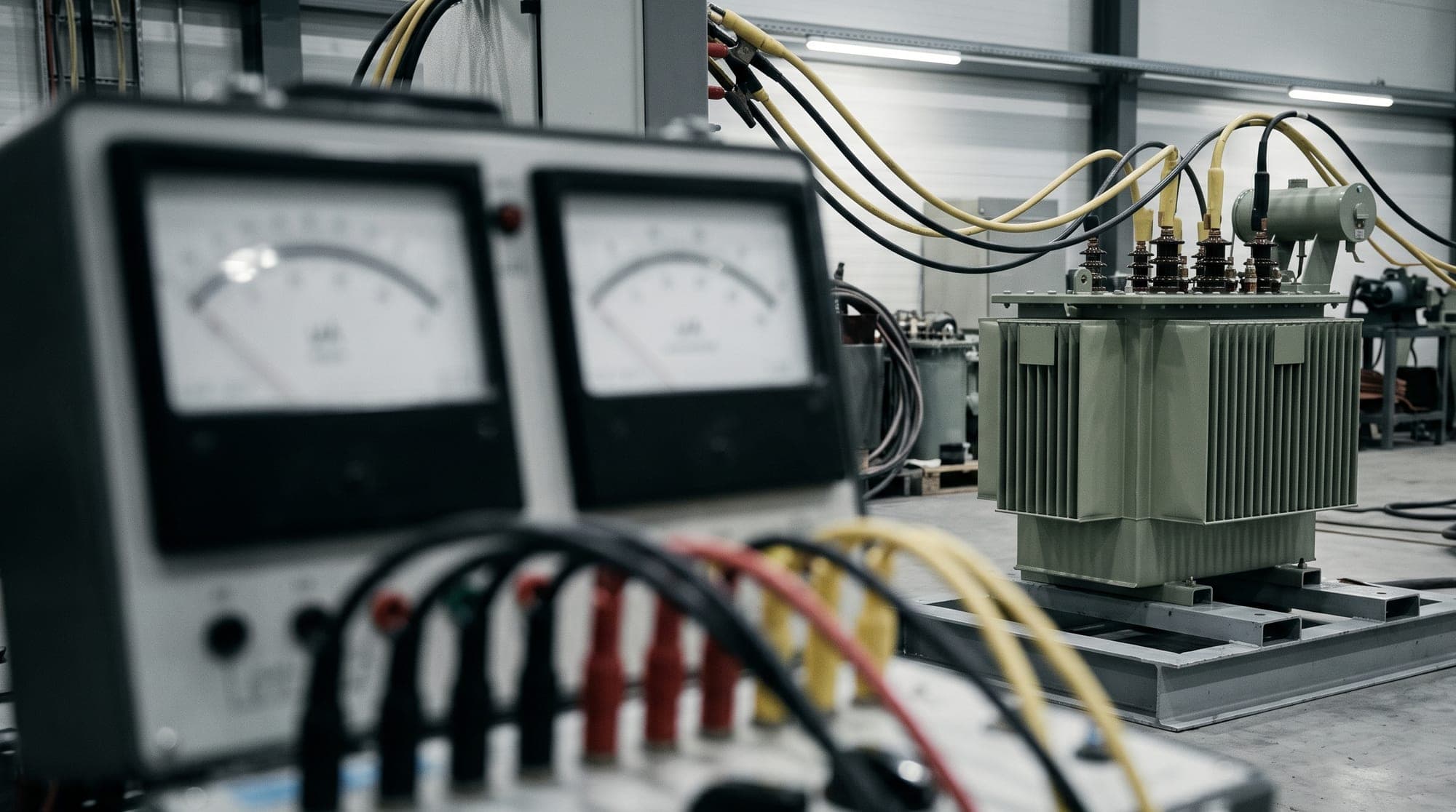
Neither certificate does. The routine test certificate does.
Every transformer should ship with results for:
- Turns ratio on all tap positions
- Winding resistance
- Insulation resistance
- No-load loss and no-load current
- Load loss and impedance voltage
This document is specific to the machine on your plinth. It is also the
commissioning baseline every later maintenance reading gets compared against —
which makes it the most useful piece of paper in the whole transaction, and the
one most often filed and forgotten.
For significant orders, ask to witness the testing. It is the point at which
the specification you wrote and the machine you are buying are demonstrably the
same thing.
- Ask for the CML number and check it is current for the product class you
are buying.
- Check the scope of the BIS licence covers your product — not just that
one exists.
- Treat ISO 9001 as a process signal, not a product guarantee.
- Insist on routine test certificates, and keep them.
- Consider witnessed testing on larger orders.
- Ask what is made in-house and what is bought in. It determines who can
actually help you when something needs changing or repairing later.
That last one is not certified by anybody, and it is often the question that
matters most once the unit is in service.
Related: About Tula Trans Electricals ·
Transformer manufacturing ·
Frequently asked questions