4 min read
Distribution vs Power Transformers: How to Choose
The dividing line is duty, not size. How load profile, loss economics and impedance decide which type a job actually needs.
SpecificationProductsBasics
Read article →No-load loss runs 8,760 hours a year whether you use the transformer or not. How the two loss types work, and why load profile decides which one to buy against.

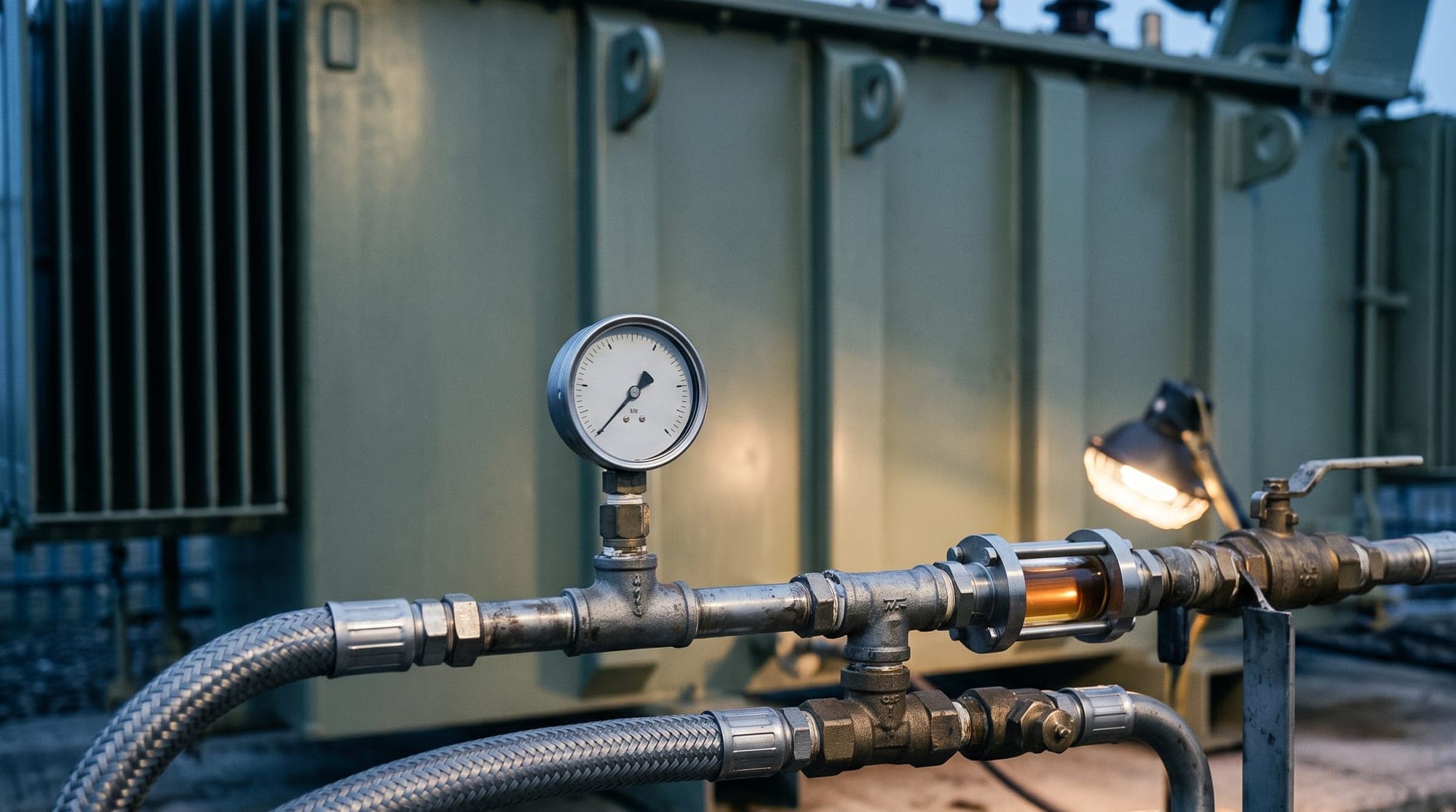
Photograph: Generated (Gemini) · Pexels
A transformer is among the most efficient machines ever built — typically 98% or better — which is exactly why its losses get ignored. The remaining couple of per cent, running continuously for thirty years, adds up to a number that frequently exceeds the purchase price of the transformer itself.
Understanding which loss you are paying for is the difference between buying the cheap unit and buying the right one.
This exists whenever the transformer is energised, regardless of whether anything is drawing power from it. It comes from the core: hysteresis, as the core material's magnetic domains reverse fifty times a second, and eddy currents circulating within the laminations.
Two properties follow, and both matter:
No-load loss is set by core material grade, lamination thickness, and the care taken in cutting and stacking. It is fixed at manufacture and cannot be improved afterwards.
This comes from resistance in the windings, and it rises with the square of the current. Double the load and load loss quadruples. At no load it is essentially zero.
Load loss is set by conductor cross-section and winding design. More copper means lower loss and a larger, heavier, more expensive transformer.
Because one loss is constant and the other is quadratic, the right design depends entirely on how the unit will actually be loaded.
A lightly loaded transformer — a distribution unit on a feeder, an oversized plant transformer, a standby — is dominated by no-load loss. It might average 25% load, which means load loss runs at about one-sixteenth of its full-load value, while core loss runs at 100% of its value continuously. Here, core quality is what you are buying.
A heavily loaded transformer — a process plant transformer running near rating on three shifts — is dominated by load loss. Here, conductor cross-section is what you are buying.
This is the practical reason a distribution transformer and a power transformer are designed differently rather than just scaled.
You do not need a detailed study to make a better decision. Take the quoted no-load and load loss figures from each tender and work out:
Annual energy = (no-load loss × 8760)
              + (load loss × loss-load-factor × 8760)
Where the loss-load factor approximates the average of the square of the load fraction across a year — not the average load. This distinction matters, and getting it wrong is the most common error in this calculation.
Multiply by your energy tariff, then by an assumed life, and compare against the price difference between units. A unit costing more with lower no-load loss frequently pays back inside a few years on a continuously energised installation.
Two things to be careful about:
There is a persistent instinct to specify a size or two up "for headroom". Sometimes that is right — where genuine growth is planned, one step up now beats a replacement in five years.
But an oversized transformer pays its full no-load loss continuously while delivering a fraction of its capability. On a lightly loaded installation, oversizing directly increases the loss that dominates your bill.
Size for the load you have plus the growth you can actually justify, and no further.
Losses are designed in, but they can get worse in service:
None of these change the nameplate figures, and all of them change your bill. Thermal imaging under load finds all three, which is a large part of why it earns its place in an annual schedule.
Related: Distribution vs power transformers · Rolled metal coils · Transformer maintenance checklist
Enquiries
Send us the rating, voltage class and site conditions. We would rather answer a technical question than send a brochure.